Bundled Services vs. Multiple Providers: Which Approach Is Right for Your Facility?

As a business leader, it’s important to weigh the benefits of on-site support–but how do you know if bundled services from a single provider or multiple specialized vendors is right for your facility?
This choice can impact operational efficiency, cost-effectiveness, and overall facility performance. As your Cincinnati area facility management specialists, Omnia360 is here to help. Let’s explore the pros and cons of each approach so you can determine which strategy aligns best with your facility’s needs.
The Case for Bundled Services
Bundled services, also known as integrated facility management or total facilities management, involve outsourcing multiple or all facility-related services to a single provider. This approach has gained popularity in recent years. 12% of all outsourced contracts are based on a total facilities management model.
Advantages of Bundled Services
- Streamlined Communication
One of the most significant benefits of bundled services is the simplification of communication. Instead of juggling multiple points of contact, you have a single provider and team overseeing all your facility needs. This centralized approach reduces the risk of miscommunication and ensures better coordination between different services.
- Cost Savings
Consolidating your facility solutions with one provider can lead to substantial cost savings. Bundled services often come with reduced rates and the elimination of redundant services. Your provider may offer better pricing for multiple services, and you’ll avoid the hassle of managing multiple invoices and contracts.
- Improved Quality Control
With a single provider responsible for all services, it’s easier to maintain consistent quality standards across your facility. The provider can establish uniform procedures and standards, ensuring that all services meet your expectations.
- Reduced Stress and Workload
Managing multiple vendors can be overwhelming, especially when dealing with various schedules, budgets, and points of contact. A bundled service approach significantly reduces this stress, freeing up your time and mental energy to focus on core business activities.
- Increased Flexibility and Responsiveness
Bundled services often offer greater flexibility in resource allocation. For example, a security guard could step in as a guest services representative when needed, effectively performing two roles and saving you money.
Potential Drawbacks of Bundled Services
- Higher Risk
Putting all your trust in a single company does come with increased risk. If the provider fails to deliver on any aspect, it could impact all your facility services.
- Limited Service Selection
While bundled services offer operational flexibility, they may limit your ability to choose best-in-class providers for specific services.
- Potential for Quality Inconsistencies
As facilities management providers attempt comprehensive service, there’s some risk that quality may fail to meet standards.
The Case for Multiple Providers
The multiple provider approach involves contracting different specialized vendors for various facility management services. This traditional model still has some merits.
Advantages of Multiple Providers
- Specialized Expertise
By choosing individual providers for each service, you can select companies with deep expertise in their specific areas. This can lead to higher quality service in each domain.
- Greater Control
Working with multiple providers allows you to have more direct control over each service area. You can make changes or switch providers for individual services without affecting your entire facility management strategy.
- Competitive Pricing
With multiple providers, you have the flexibility to negotiate prices for each service independently, potentially leading to cost savings in specific areas.
Potential Drawbacks of Multiple Providers
- Communication Challenges
Managing multiple providers can lead to communication breakdowns. On average, operators work with at least 20 service providers, each with their own point of contact and accounting department. This can quickly become overwhelming and lead to missed information and inefficiencies.
- Coordination Issues
With multiple providers, coordinating services and schedules can be challenging. This can lead to potential gaps or delays in services.
- Increased Management Overhead
Managing relationships with multiple vendors requires more time and effort from your internal team. This increased workload can detract from other important business activities.

Making the Right Choice for Your Facility
Deciding between bundled services and multiple providers depends on various factors specific to your facility and organization. Consider the following when making your decision.
- Facility Size and Complexity: Larger, more complex facilities with multiple locations may benefit more from bundled services due to the streamlined management approach.
- In-house Expertise: If you have strong in-house facility management expertise, you might be better equipped to manage multiple providers effectively.
- Budget Considerations: While bundled services often offer cost savings, carefully compare the total costs of both approaches for your specific situation.
- Service Quality Requirements: If certain services are critical to your operations and require specialized expertise, you might prefer to work with best-in-class providers in those areas.
- Flexibility Needs: Consider how often your facility management needs change and which approach offers the flexibility you require.
Recapping the Advantages of Bundled Services vs. Multiple Providers for Your Organization
Both bundled services and multiple provider approaches have their merits and drawbacks. The right choice depends on your facility’s unique needs, resources, and priorities.
For organizations with complex, multi-site facilities, the benefits of bundled services make it an attractive option. The single point of contact and comprehensive approach can lead to more efficient and effective facility management.
If your facility has highly specialized needs in certain areas or if you prefer more direct control over individual services, working with multiple providers might be the better choice. Ultimately, the goal is to find an approach that ensures your facility runs smoothly, cost-effectively, and in alignment with your organization’s objectives.
Partner With Omnia360 for Exceptional Facilities Management
At Omnia360, we know that there’s no one-size-fits-all approach to facilities management. Connect with us today for a tailored approach and tradition you can trust to streamline your business operations.
The Role of Environmental Services Technicians in Facility Management

In facility management, environmental services technicians keep our spaces clean, safe, and conducive to productivity.
Their work aims to maintain environmental quality in commercial, industrial, and institutional settings.
What is an Environmental Services Technician?
An environmental services technician maintains indoor spaces’ cleanliness, hygiene, and safety standards.
Related Post: Factors Affecting Commercial Cleaning Costs
You might see these professionals at office buildings, hospitals, manufacturing facilities, or educational institutions. An environmental services technician’s primary goal is to make sure these spaces meet regulatory requirements and provide a healthy atmosphere for occupants.
Environmental Services Technician Job Description
The job description of an environmental services technician encompasses many responsibilities specific to the facility they serve.
Related Post: Commercial Janitorial Services and Facility Solutions
Omnia360 is currently hiring environmental services technicians for roles like housekeeping, laundry attendant, and supervisor.
Here’s a summary of some typical tasks associated with this role.
- Cleaning and sanitization: Environmental services technicians clean and sanitize areas within a facility, including restrooms, common areas, and workspaces. This involves cleaning agents, equipment, and techniques to eliminate dirt, germs, and other contaminants.
- Waste management: Environmental technicians collect and dispose of waste materials according to regulatory guidelines. This may involve handling hazardous materials safely, especially in environments like hospitals, and ensuring compliance with waste disposal regulations.
- Indoor air quality management: Indoor air quality (IAQ) significantly impacts the health and well-being of building occupants. In this job, you might be expected to monitor and improve IAQ through ventilation maintenance, air filtration, and pollutant control.
- Emergency response: Technicians are expected to respond swiftly to emergencies such as spills, leaks, or contamination.
- Compliance and documentation: Technicians are responsible for understanding relevant regulations. This may involve conducting inspections, documenting procedures, and reporting non-compliance issues.
- Training and education: This role may also provide training and education for best practices for environmental hygiene, waste management, and safety protocols.
Role of Environmental Service Technicians in Facility Management
Environmental services technicians bring their expertise to ensure commercial, industrial, and institutional spaces remain in top-notch condition.
What sets Omnia360’s environmental services technicians apart is their tailored approach to each facility’s specific requirements, whether an office building, a hospital, or a manufacturing facility.
In addition to their expertise in cleaning and maintenance, environmental services technicians contribute to facility management’s overall efficiency and cost-effectiveness. Omnia360’s integrated solutions streamline processes, eliminating the need for multiple service providers, resulting in reduced overhead costs.
Partnering with Omnia360’s service technicians means elevated responsiveness in facility management. Operating 24/7, we’re available to address any cleaning or maintenance issues as they happen. This around-the-clock availability provides peace of mind and enhances operations efficiency.
Quality assurance is another top priority for environmental technicians, who conduct regular inspections to ensure that their service meets high standards of excellence.
Related Post: How Regular Janitorial Inspections Save You Money by Omnia360
Businesses can entrust the upkeep of their spaces to capable hands, allowing them to concentrate on other core services while ensuring a clean environment.
Facility Management With Omnia360
Collaborating with environmental service technicians results in cleaner, healthier, and more sustainable spaces. Learn more about Omnia360’s integrated facility management services, apply for a position, or request a FREE assessment.
Your Guide to Winterize Your Landscaping

Winterizing your landscaping is crucial for the health and longevity of your plants and the overall appeal of your property.
In this guide from Omnia360, we’ll share the steps to ensure your landscaping thrives despite the cold temperatures.
Pruning and Trimming
One of the first tasks in winterizing your landscaping is to prune and trim your plants and trees. Remove any dead or diseased branches. They are more susceptible to breakage under the weight of snow and ice. Proper pruning promotes healthier growth in the spring and reduces the risk of winter damage.
Omnia360 recommends scheduling pruning sessions in late fall or early winter to allow plants to enter dormancy without the stress of recent cuts.
Mulching for Insulation
A layer of mulch around the base of trees, shrubs, and perennial plants provides insulation and protection during winter. Mulch helps regulate soil temperature, preventing extreme fluctuations that can harm roots. A 2-4 inch layer of organic mulch, such as bark or compost, is ideal for retaining moisture and providing a buffer against freezing temperatures.
Related Post: Commercial Landscape Maintenance Guide
We want to emphasize the importance of keeping mulch a few inches away from the base of trees and plants to prevent rot and discourage pests.
Watering, Hydration, and Sprinkler Systems
Hydration is crucial for plant survival during winter, especially evergreens that continue to lose moisture through their leaves. Before the ground freezes, ensure your landscaping receives a thorough watering. Well-hydrated plants are better equipped to withstand winter stress and are more resilient to freezing temperatures.
Pay attention to the moisture levels throughout the winter, providing supplemental water during dry spells when the ground is not frozen.
Winterizing a Commercial Sprinkler System
This step is crucial to protect your system from freezing temperatures, which can lead to costly damage.
Follow these steps to winterize your commercial sprinkler system:
Shut Off the Water Supply
Locate the main shut-off valve for your sprinkler system and turn it off. This valve is usually in a heated area like a utility room or basement.
Drain the System
After turning off the water supply, drain the water from the sprinkler system. Open all the drain valves and low-point drains, allowing water to flow out. Ensure that water is completely drained from the mainline, lateral lines, and all the sprinkler heads.
Open Drain Valves
Open all the drain valves and test cocks on backflow preventers. This step is crucial for preventing water from freezing inside the components.
Use Compressed Air
Connect an air compressor to the system using a proper fitting. Gradually increase the air pressure, starting from the furthest sprinkler head from the compressor. Blow out each zone separately until no water comes out of the heads. Repeat this process for each zone in the system.
Check Pressure
Monitor the air pressure during the blowout process, ensuring it stays within the recommended range for your sprinkler system. Excessive pressure can damage the system.
Inspect and Clean Sprinkler Heads
While the system is depressurized, inspect and clean all sprinkler heads. Remove any dirt, debris, or mineral buildup that may affect the system’s performance.
Protect Backflow Preventer
Wrap the backflow preventer with insulation or a thermal blanket to shield it from extreme temperatures. This is especially important as backflow preventers are sensitive to freezing conditions.
Store or Protect Components
Remove and store above-ground components, such as backflow preventers and controllers. If removal is not possible, consider insulating these parts.
Clearly label shut-off valves, backflow preventers, and other critical components. This documentation will be helpful during the spring start-up.
Monitor Weather Conditions
If unseasonably cold weather is predicted, take additional precautions, such as adding insulation or scheduling an extra blowout.
If you’re unsure about any aspect of the process or lack the necessary equipment, contact the team at Omnia360 for a thorough winterization process.
Protecting Vulnerable Plants
Some plants, especially newly planted or tender varieties, are more susceptible to winter damage.
Protective coverings such as burlap wraps or frost blankets provide insulation while allowing air circulation, preventing heat buildup, and reducing the risk of diseases. Remove the covers during milder days to allow the plants access to sunlight and fresh air.
Snow and Ice Removal
Heavy snow can lead to bent or broken branches, especially on evergreens. Safely remove excess snow from branches using a broom to prevent damage.
Related Post: What are ‘Hard’ and ‘Soft’ Facility Management Services?
Ice accumulation is another concern, weighing down branches and causing breakage. We advise against using salt-based de-icers near plants, which can harm the soil and roots. Environmentally friendly alternatives such as sand or calcium magnesium acetate can improve traction on icy surfaces.
When to Call in the Professionals
Winterizing landscapes may be efficiently addressed by outsourcing to a facility management company.
Related Post: Why Your Landscaping Business Needs Facility Management
One of the primary challenges businesses face is a lack of expertise in crafting a tailored winterization plan. Omnia360 brings in professionals who can conduct thorough assessments, ensuring a customized winterization strategy.
Our team possesses the right tools and equipment for the job and prioritizes safety. We’ll address concerns about handling potentially hazardous tasks during winterization.
Additionally, businesses deal with time constraints, making finding the necessary hours for comprehensive winterization challenging. By outsourcing this work, companies can focus on priority work without compromising their landscaping.
Contact Omnia360 Facility Solutions for Landscape Maintenance
Winterizing your landscaping is an investment in the long-term health of your property. Contact us at (833) 360-6642. The team at Omnia360 provides around-the-clock, comprehensive services that work with your in-house team.
What’s the Difference – Preventive vs. Predictive Maintenance

Routine maintenance services ensure the smooth operation of facilities, from commercial buildings to industrial complexes. Incorporating maintenance checks into your facility provides a productive business.
Two key strategies are preventive and predictive maintenance. In this blog, Omnia360 explains the differences between these two approaches and how they can maximize efficiency.
What’s the Difference?
Preventive maintenance is a strategy that prevents problems through regular inspections and scheduled maintenance. Predictive maintenance takes a data-driven approach, using technology to monitor equipment and facilities in real time and then using that information to plan.
Understanding Preventive Maintenance
Preventive maintenance is a proactive approach where maintenance activities are scheduled regularly, regardless of apparent equipment issues.
Related Post: 5 Preventative Maintenance Tips for Commercial Buildings
These tasks aim to prevent potential problems before they occur, ensuring that equipment and facilities remain in working condition with the aim of preventing expensive breakdowns and equipment replacement for as long as possible.
A preventative maintenance strategy includes steps like:
Scheduled inspections: Creating a detailed maintenance schedule, including routine inspections, cleaning, and minor repairs. With a structured timetable, potential issues can be identified and addressed before they escalate.
Cost control: Preventive maintenance helps control costs by minimizing unexpected breakdowns and expensive emergency repairs. By regularly servicing equipment and facilities, companies can extend their lifespan and reduce the need for replacements, ultimately saving money.
Enhanced safety: Regular inspections can uncover safety hazards, allowing for timely remediation. This proactive approach ensures a safer environment for occupants and employees within the managed facilities.
Understanding Predictive Maintenance
Predictive maintenance takes a more data-driven and condition-based approach. It uses technologies, such as sensors, IoT devices, and data analytics, to monitor the condition of equipment and facilities in real time.
Related Post: Top 5 Facility Management Trends in 2022
This approach enables maintenance teams to make informed decisions based on the actual health and performance of assets.
A predictive maintenance strategy includes steps like:
Data-driven insights: A comprehensive FM company should use sensors and monitoring systems to collect equipment and facility conditions data. This data is analyzed to identify trends and anomalies, enabling maintenance teams to predict when maintenance is needed. For example, an HVAC system has certain parameters based on how long the system runs and under what conditions. Based on these parameters, coupled with sensors that monitor energy consumption and output, the data
Reduced downtime: Predictive maintenance aims to minimize downtime by scheduling maintenance activities only when data indicates a potential issue. This approach optimizes the use of resources and reduces disruptions to facility operations.
Cost efficiency: By addressing maintenance needs precisely when they arise, companies can minimize unnecessary expenses associated with over-maintaining equipment. This can lead to substantial cost savings over time.
Improved asset performance: Predictive maintenance allows for the early detection of equipment degradation, enabling maintenance teams to replace or repair components before they fail. This leads to improved asset performance and longevity.
How to Choose the Right Approach
The choice between preventive and predictive maintenance depends on factors like the type of facility, equipment, budget, and goals. In most cases, though, a hybrid approach that combines elements of both strategies is ideal.
Omnia360 uses both preventive and predictive maintenance strategies in facility management.
Examples of a Blended Approach
Equipment importance: Critical equipment that, if it fails, could significantly impact facility operations or safety benefits from a predictive maintenance approach. Less critical equipment can still be maintained preventively.
Budget constraints: Budget considerations play a crucial role in the decision-making process. While predictive maintenance may require an upfront investment in technology, it can yield substantial long-term savings.
Facility complexity: The complexity of the facilities can influence the choice between preventive and predictive maintenance. Predictive maintenance can offer a more granular approach in environments with numerous assets.
Contact Omnia360 for Comprehensive Maintenance Services
Both preventive and predictive maintenance approaches have advantages, and the team at Omnia360 considers both to create a well-balanced system.
We provide around-the-clock, comprehensive, integrated facility management services that work with your in-house team. Contact us at (833) 360-6642.
Integrated Facility Solutions for Eco-Friendly Buildings

A major trend in the facility management industry is using eco-friendly, “green” practices when maintaining buildings. This move follows on the heels of the national and worldwide motivation to reduce the carbon footprint.
In today’s blog, Omnia360 explains how integrated facility solutions can work to promote eco-friendly buildings.
What does Sustainable Facility Management (SFM) Mean?
It’s a process that involves implementing operational or structural changes that incorporate efficiency, comfort, safety, and productivity to ensure more environmentally friendly practices at a facility.
Implementing sustainable facility management involves taking action on multiple fronts:
- Regular maintenance to your building’s infrastructure (HVAC or Plumbing)
- Utilizing eco-friendly products, tools, and materials at work
- Promoting energy-efficient practices and behaviors, like recycling
Using energy-efficient equipment, alongside environmentally-friendly maintenance practices, is part of what makes a facility eco-friendly and promotes a lower carbon footprint.
Regular maintenance, especially from cross-trained industry professionals like those at Omnia360, helps to mitigate against wasteful energy usage, whether it’s an ineffective plumbing or HVAC system that’s causing it.
Monitor Eco-Friendly Improvements and Goals
What gets measured and tracked, gets improved. Setting up a plan to monitor performance is done in order to ensure your facility is minimizing its carbon footprint, while still operating productively.
Here’s an example. You might account for all the paper printing at your office, then decide on which documents can be shifted into strictly digital assets, avoiding unnecessary paper printing.
Utilize Eco-Friendly Cleaning Solutions
If your office needs cleaning, you can choose to have “green” cleaning products be used to get the job done. Many industrial cleaning products contain hazardous chemicals that, if not disposed of properly, end up causing environmental harm.
Sustainability Analytics
A facility management team can identify and track progress on key metrics that pertain to the eco-friendly performance of your facility. What gets measured and tracked, gets improved upon. This includes your building’s carbon footprint.
Leverage the Help of a Management System
A CMMS (Computer Maintenance Management System) can improve internal operations and lend to developing a more sustainable method of updating and maintaining your building. You can read our related article about the top facility management software products.
Preventative Maintenance
Omnia360 offers a trained staff of handymen and trade professionals who provide 24/7 maintenance to ensure your facility is running optimally and is the most eco-friendly possible.
Update Infrastructure
Let’s say your HVAC system is outdated and is underperforming, this costs your company more money on monthly energy bills. As a green solution, you might decide to install cool or green roofing, or even solar energy panels, if your budget allows for it.
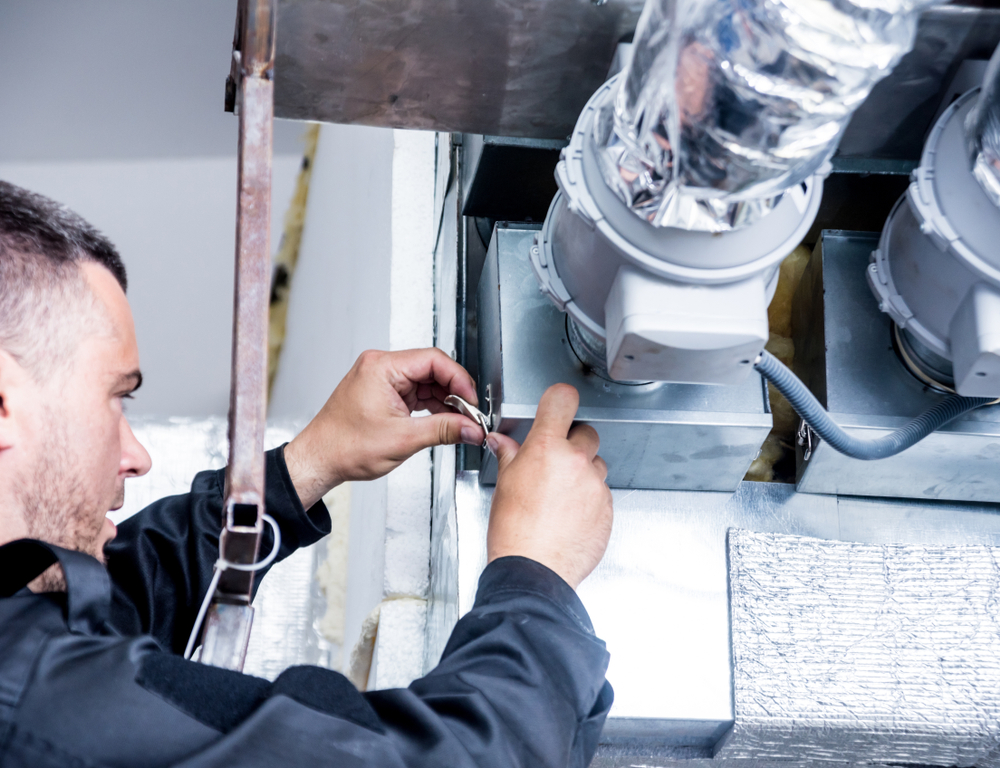
Hiring a professional all-in-one third-party contractor like Omnia360 allows you to get up-to-date infrastructure installed quickly and easily.
Lighting systems
Use natural light as often as possible. Opening the windows more creates more natural light around the office, as well as sparingly using lights in adjacent, low-occupation rooms in your building. Installing LED lights can help save both on your monthly bill and lower your energy consumption.
Heating and Cooling Systems
Your building’s HVAC is an important part of what makes it an eco-friendly facility. Having the right equipment and the right repairs being completed by a skilled facility management company will not only save you money but offer you a more eco-friendly building.
Efficient Use of Office Space
Restructuring how your office workspaces are laid out to reduce space leads to less energy consumption. This is even more so the case today, with the advent of people working remotely from coffee shops or homes rather than office cubicles.

Efficient Water Irrigation Systems
Making good use of your building’s water management is also important when attempting to be eco-friendly. Water-efficient lawn care for your business can often mean growing vegetation that is native to your local climate. Even creating indoor spaces for moisture-absorbing plants can aid in promoting fresh, breathable air and lower humidity levels for employees and customers to enjoy.
Contact Omnia360 for Eco-Friendly FM Solutions
Our company can work with you to make your facility more environmentally friendly and efficient all the way around. Think of us as an extension of your workforce that is there as a resource to support you expand your business operations. Contact us today for more information about our bundled services and management solutions.
Utilizing Integrated Facility Solutions in Spring Cleaning: Omnia360 Explains

Spring is upon us and just like flowers and plants emerging from winter, it’s a time for your business to grow, expand and achieve a more streamlined efficiency. It’s time for some spring cleaning.
Work orders might have piled up over the winter, and there may even be plenty of maintenance or repair work needed at your office. Integrated facility management solutions can make your company’s spring cleaning a breeze.
In today’s blog, our team at Omnia360 explains how using integrated facility solutions services allows your company to quickly and thoroughly complete its spring cleaning.
Have a Single Point of Contact for Third-Party Contracts
You don’t have to juggle work orders, emails, and phone calls for dozens of third-party contractors just to get some spring cleaning done. Streamline the entire process by getting any spring cleaning maintenance or repair service from one firm, with the ease and simplicity of one phone call.
At Omnia360, we host a network of industry cross-trained professional technicians who serve as an extension of your own workforce; on call 24/7, our technicians can show up to your business location and fix whatever issue you might be faced with.
Some of our specialties include (but aren’t limited to):
- Landscaping
- Electrical repair
- HVAC maintenance, installation, and repair
- Pest removal
- Landscaping
- Plumbing and general handyman services
Outsource to Save Time, Money and Energy
As a business owner, you know that your company needs to stay competitive in a tightening market. Omnia360’s facility management solutions helps you to do just that.
By outsourcing your maintenance and repair needs to a single third-party provider, you’ll not only be able to cut down on your expenses, but you’ll gain the opportunity to reallocate your finite time and energy towards optimizing your business’s internal operations.
Teaming up with Omnia360 saves your company time and manpower that is better used for increasing your profitability, making internal management shifts, reprioritizing your marketing efforts, or, perhaps, expanding into new markets for the coming quarter.
Preventative Maintenance and Securing your Investment
They say prevention is the best cure. We make sure your facility, and the equipment it runs on, are running smoothly. We analyze your business’s specific needs and hand-select a custom team of cross-trained professionals who can best manage your facility’s grounds.
We offer comprehensive, mobile, and integrated maintenance duties, including lawn care, cleaning your ductless HVAC system, or sanitizing your offices.
Find the Best Facility Solution Services Today
For information about how Omnia360’s integrated facility management service options can help simplify, streamline and energize your company’s internal and external operations, give us a call today at 833.360.6642, or fill out a contact form on our website.