4 Phases of Planned HVAC Maintenance (Inspection, Cleaning, Adjustment, and Repair)

Planned HVAC maintenance is a proactive, scheduled service strategy designed to keep commercial heating and cooling systems operating at peak performance. By utilizing a phased approach, facility managers can significantly reduce unplanned downtime, optimize energy efficiency, and extend the overall HVAC lifecycle.
Omnia360 leverages these four distinct phases to provide standardized, high-quality maintenance across diverse multi-site portfolios, ensuring your assets remain compliant and cost-effective.
What Are the 4 Phases of HVAC Maintenance?
The four phases of planned HVAC maintenance are:
- Inspection
- Cleaning
- Adjustment
- Repair
This systematic approach ensures that technicians first identify potential issues, restore hygiene and airflow, fine-tune mechanical and electrical components for efficiency, and finally, perform proactive repairs to prevent catastrophic equipment failure and emergency service calls.
Connect With Omnia360 for a Free Assessment

How the 4 Phases of Planned HVAC Maintenance Work
Phase 1: Inspection
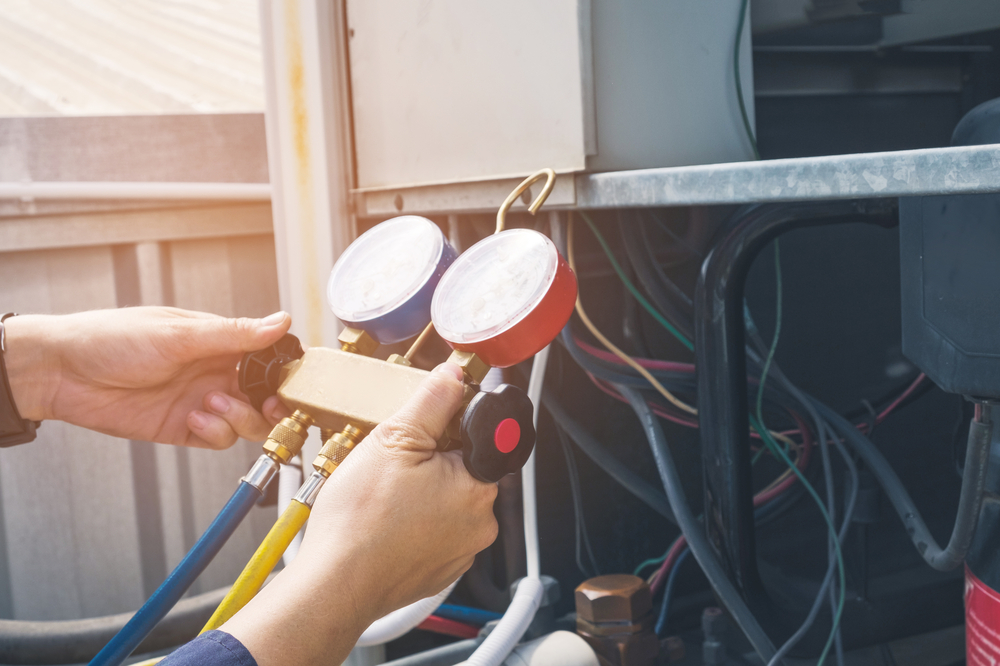
A thorough commercial HVAC inspection goes beyond a simple visual walkthrough. Technicians analyze performance metrics, check safety controls, and evaluate the physical integrity of the unit. This data feeds directly into a commercial HVAC inspection checklist, identifying wear patterns before they cause a shutdown. Key focus areas include heat exchanger integrity, electrical connections, and refrigerant levels.
Phase 2: Cleaning
System hygiene is critical for both indoor air quality (IAQ) and mechanical longevity. This phase involves deep-cleaning evaporator and condenser coils, replacing air filters, and clearing condensate drains and cabinets. Removing debris reduces the workload on the compressor, lowering energy consumption and preventing premature component burnout.
Phase 3: Adjustment
During the adjustment phase, technicians perform precise HVAC preventive maintenance steps to calibrate the system for current seasonal demands. This includes tightening fan belts, lubricating moving parts, checking refrigerant charges, and recalibrating thermostats and building automation system (BAS) setpoints to ensure optimal airflow and temperature control.
Phase 4: Repair
The final phase addresses findings from the previous three steps. By performing proactive repairs, such as replacing a frayed belt or a failing capacitor, Omnia360 helps facility directors avoid the high costs of emergency calls. Repairs are prioritized based on criticality, allowing for predictable capital planning rather than reactive crisis management.
Support HVAC Lifecycle Management With Planned Maintenance
Effective HVAC lifecycle management depends on consistency. When the four phases are performed regularly, the “total cost of ownership” for an asset drops significantly.
- Asset Longevity: Routine maintenance can extend the life of a rooftop unit (RTU) by 5-15 years.
- Predictable Spend: By identifying repairs in Phase 4, managers can move from emergency budgets to planned budgets.
- Capital Planning: Detailed inspection reports provide the data needed to justify equipment replacement cycles before the units fail.
Seasonal HVAC Startup and Shutdown Best Practices
Your maintenance needs shift with the weather. Integrating the four phases into a seasonal maintenance startup ensures your facility is prepared for temperature extremes.
- Spring/Summer Startup: Focuses heavily on Phase 2 (coil cleaning) and Phase 3 (refrigerant levels) to handle high cooling loads and high humidity.
- Fall/Winter Startup: Prioritizes Phase 1 (safety inspection) of heat exchangers and burners to prevent carbon monoxide risks and ensure reliable heating during sub-zero temperatures.
Commercial HVAC Inspection Checklist for Facility and Plant Managers
To maintain standardization across multi-location portfolios, use this checklist to verify the quality of your planned HVAC maintenance.
Phases 1 and 2: Inspection and Cleaning
- Check and replace air filters (quarterly).
- Clean evaporator and condenser coils (biannually).
- Inspect heat exchanger for cracks or corrosion.
- Clear condensate drain lines and pans.
Phases 3 and 4: Adjustment and Repair
- Test electrical connections and tighten terminals.
- Lubricate motors and bearings.
- Check belt tension and alignment.
- Verify refrigerant charge and check for leaks.
- Calibrate thermostats and sensors for accuracy.
What “Good” Planned HVAC Maintenance Looks Like With Omnia360
For multi-site commercial, healthcare, and industrial organizations, “good” maintenance isn’t just about fixing a broken fan; it’s about data-driven results. Omnia360 delivers value through:
- KPI-Driven Reporting: We track downtime, asset age, and cost-per-square-foot, giving you a transparent view of your portfolio’s health.
- Multi-Site Standardization: Whether you have five locations or fifty, our 4-phase process ensures the same high standard of care at every site.
- Compliance-First Approach: We specialize in the rigorous documentation required for healthcare and industrial environments, ensuring you are always audit-ready.
HVAC Maintenance FAQs
How often should commercial HVAC systems be inspected?
For most commercial facilities, a quarterly inspection schedule is recommended. This allows for seasonal adjustments (Phase 3) and ensures that filters and coils are cleaned (Phase 2) frequently enough to maintain high indoor air quality and energy efficiency.
What is the difference between planned HVAC maintenance and reactive repairs?
Planned maintenance is proactive, occurring on a set schedule to prevent failure. Reactive repair happens after a system has already failed. Planned maintenance (Phase 1–3) significantly reduces the need for reactive repairs, which are typically 3x more expensive and cause facility downtime.
How can planned HVAC maintenance reduce emergency calls and downtime?
By identifying minor component wear during the Inspection and Adjustment phases, technicians can perform Phase 4 repairs before the part fails. This “catch-it-early” philosophy eliminates the majority of common causes for emergency service calls.
What should be included in a commercial HVAC inspection checklist?
A comprehensive checklist must include electrical testing, refrigerant level verification, belt and motor lubrication, and deep cleaning of coils and drains. Omnia360’s checklists are tailored to specific asset types to ensure no critical safety or performance step is missed.
Ready to stabilize your facility costs and eliminate HVAC downtime? Request a facility assessment or program review with Omnia360 today.